
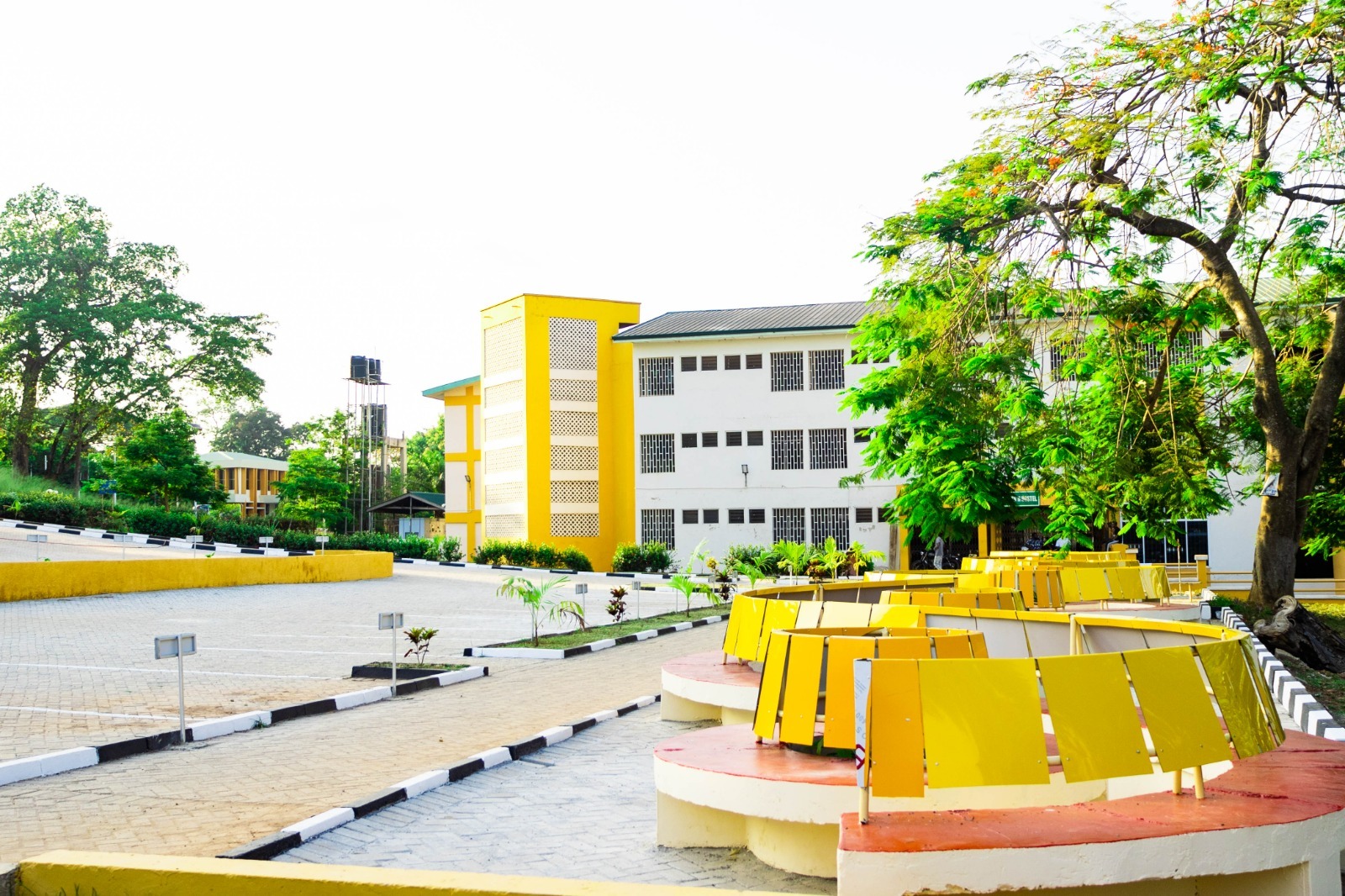
The KNUST-Owned Hostels (KOHs) under the Directorate of Student Affairs (DoSA) have completed two infrastructure projects aimed at improving student welfare, safety and residential life on campus.
The projects include the construction of a car park and outdoor sitting area at the Otumfuo Osei Tutu II (SRC) Hostel and the installation of closed-circuit television (CCTV) cameras at the Otumfuo Osei Tutu II (SRC), Shaba and Graduate Students' hostels.
The projects were funded through the internally generated funds (IGF) of the KNUST-Owned Hostels.
The Director of Student Affairs, Professor Marian Asantewah Nkansah, said the projects form part of efforts to improve student accommodation and strengthen security across the hostels.
"The newly completed car park provides a modern and secure parking space, helping to improve traffic flow and maintain a cleaner hostel environment," she said.
She explained that the outdoor sitting area was created to provide students with a space to study, meet and interact outside their rooms.
"The sitting area offers a comfortable outdoor space where students can relax, engage in academic discussions, hold group meetings and participate in recreational activities," she said. "The facility is expected to foster stronger social interaction and collaborative learning among residents."
On the security project, Professor Nkansah said the CCTV system would strengthen surveillance across the hostels.
"The newly installed CCTV surveillance system is expected to enhance security monitoring by supporting the timely detection and deterrence of unauthorized activities," she said.
She added that the system is also expected to reduce theft and other security incidents while improving the safety of students, visitors and hostel staff.
The Hall Master of the KNUST-Owned Hostels, Professor James Osei Mensah, said the projects form part of a broader plan to improve the hostel environment.
"The project is proof of the Hostel's dedication to creating a clean, conducive and student-centred living environment," he said.
"By investing in infrastructure that supports both academic and social engagement, the Hostel continues to enhance the quality of campus life while responding to the evolving needs of its residents."
Professor Osei Mensah said the car park and sitting area add to other projects already completed at the hostels.
These include the installation of a 400 kVA power plant to reduce the impact of power outages and the renovation of washrooms with new fittings and amenities.
Speaking on the CCTV installation, he said the surveillance system forms part of the hostels' long-term security strategy.
"The installation of the CCTV system forms part of the KNUST-Owned Hostels' broader commitment to strengthening security infrastructure and enhancing the safety and well-being of student residents," he said.
"Through the strategic deployment of modern surveillance technology, Management continues to improve security operations while fostering a safe and secure living environment that supports students' academic pursuits and overall campus experience."
Speaking on behalf of the management of the KNUST-Owned Hostels, Ing. Dr Mrs Dorothy Araba Yakoba, Senior Hall Tutor, thanked the University's leadership and technical partners for supporting the projects.
She expressed appreciation to the immediate past Vice-Chancellor, Professor Rita Akosua Dickson; the Vice-Chancellor, Professor Christian Agyare; the Director of Student Affairs, Professor Marian Asantewah Nkansah; the former Director of Student Affairs, Professor Wilson Agyei; the team of architects led by Professor Titus Ebenezer Kwofie; and the technical team from the University Information Technology Services (UITS) for their contributions to the completion of the projects.
She said the support of the various stakeholders made it possible for the hostels to complete projects that improve student accommodation, security and campus life.
Management of the KNUST-Owned Hostels said it would continue to reinvest internally generated funds into projects that improve facilities and support the welfare of students living on campus.


